





In Motion is our 18-month programme that supports composers and music makers at pivotal points in their careers. Through personalised coaching, networking and funding, artists are given the space to develop their practice, explore new ideas and realise their ambitions, culminating in a final creative project for public release.
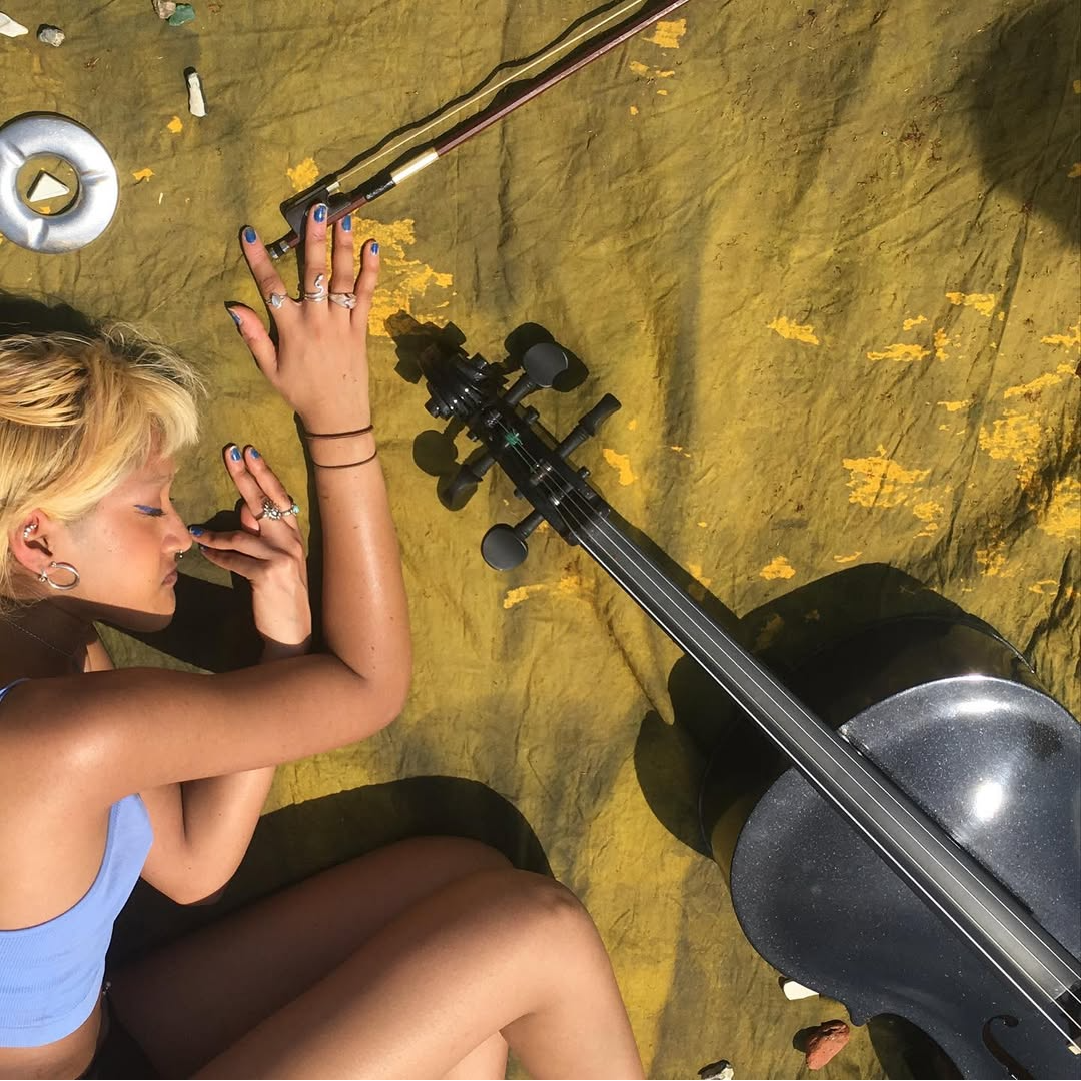
In this Q&A, we speak to In Motion 2025 composer Ushara Dilrukshan, a London-based, Sri Lankan multi-media performance artist. Her works tackle ideas of cultural identity, womanhood and trauma explored through narratives. The work aims to open up questions and start discussions about experiences of similar narratives and journeys through life.
What role does technology or experimentation play in your composition process?
Merging traditional and modern practices leads to technology and experimentation playing a vital part in my compositional process. Part of the practice lies within the discovery of new sounds through experimentation with different facets.
Can you tell us about your musical influences?
My musical influences surround me completely, from the natural sounds of the earth to mechanical sounds along pathways, sounds are continuously influencing and inspiring me. Twilight Zone is a monthly radio residency I hold with Rough Radio, an online based radio station; within this show I curate a selection of songs and mixes focusing on my main inspirations surrounding experimental, neo-classical and noise. Some of which include; Kali Malone, Raphael Henard, Tim Hecker, Ganavya, Hildegard Von Bingen.
What do you hope audiences take away from your work?
I hope that audiences are able to enter a space within themselves; a realm of discovery crafted through sonic world building with the use of field recordings, poetry and sound of body, spirit and mind. I hope that they can uncover realms of my cultural heritage and pain in tandem with me.
What does collaboration mean to you, and how do you approach working with others?
Collaboration is key to my practice, improvising and reacting and developing with others is what has allowed me to develop my practice. A key part of this is Cell Deletion 11; which is an experimental noise duo with Sonnie Carlebach; within this we collaborate through improvisations with live instrumentations; tape loop manipulations; voice and theatrical practice.
What are you looking forward to most about In Motion?
I’m looking forward to developing my project further merging organ, coding and expanded vocal practices while uncovering new stories through my journey. More so, I’m eager to journey further into my cultural heritage, carving out a story for all who will listen.
Sound and Music is a PRS Foundation Talent Development Network Partner supported by PPL.
In Motion is made possible with the generous support of Arts Council England, Jerwood Developing Artists Fund, The Garrick Charitable Trust, Creative Scotland National Lottery and PRS Foundation.

Learn more about Ushara
Learn more about In Motion
Meet all of the In Motion 2025 Composers