





The Seed Award is a targeted package of support, including coaching sessions and a small bursary to enable artists to research and develop a particular project or take the next step in their creative journey.
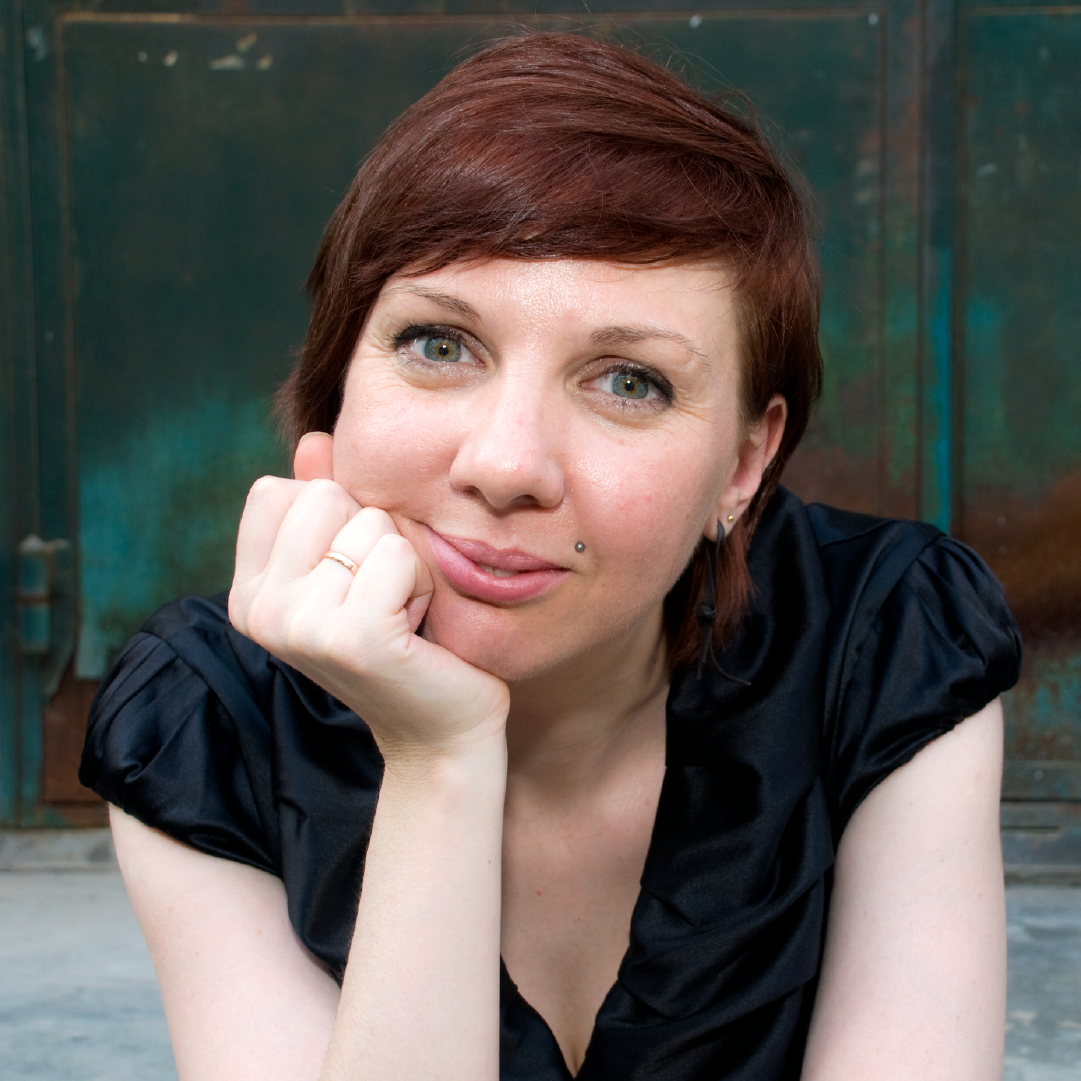
In this Q&A, we speak to Seed Award 2025 winner Amble Skuse, a composer and sound artist who uses disability theory, body sensor technology, spoken word interviews and electronics to create unique sound works. She is interested in the interface between the disabled body and the exterior world, and has explored this through numerous sound walks using her wheelchair. Amble is a Royal Philharmonic Society Composer 24/25, recently won a Special Commendation Daphne Oram Award for her work in electronic music, and was selected as Scotland’s representative for the International Society Contemporary Music Festival 2024.
Are there any particular themes, ideas or questions that you find yourself returning to in your work?
My current work uses a lot of interviews. I find this endlessly fascinating as I have the permission to ask questions which I might not otherwise ask. Unpicking how people perceive themselves, how society perceives them and the complex web between the two are huge themes for me at the moment.
This has been mainly focused around disability, as I think there is a wealth of insight and knowledge in the community which is rarely drawn upon by more mainstream society. How disabled people navigate the world, how they deal with the complex assumptions placed upon them, and how they support each other through this process is something I’ve delved into again and again.
What role does technology or experimentation play in your composition process?
I work a lot with technology. I have pieces which use various body sensors including EEG, ECG and movement sensors. I’m interested in the way that we might interface with technology through non-directive means.
By this I mean that our body is creating data which can generate sound, music and video without us having a conscious control over that output. Again, this tends to focus on ideas around disability: how are our bodies generating our reality? How do we interface with technology as disabled people? How do we explore themes of dependency and interdependency using technology and the body as mediums?
What’s your relationship with improvisation, and how does it shape your work?
Most of my work is improvisation. I work with other improvisers and explore how we might become interdependent or collaborative. I’m interested in non-hierarchical and interdependent structures where everyone is free to make their own decisions and to be authentic to themselves.
Again, this draws on disability theory, looking at how hierarchical structures can perpetuate exclusion, and how humans can be fluctuating beings without giving up their autonomy or losing respect from others.
I’ve also done improvisational collaborations with my own body using sensors. So I am improvising and the sensors are sending data to the laptop which processes the improvisation. I can then respond to what the laptop has produced. In this way I become a sort of three-way collaboration between my instrument, my body and the laptop.
Sound and Music is a PRS Foundation Talent Development Network Partner supported by PPL.
The Seed Award is made possible with the generous support of Arts Council England, Jerwood Developing Artists Fund, The Garrick Charitable Trust, Creative Scotland National Lottery and PRS Foundation.
